



Order Fulfillment Is more than “sending parcels”: It is the part of your logistics Who Decides Whether orders reach customers quickly, correctly and in line with the brand. If your order fulfillment runs smoothly, you can grow predictably because you can process more orders without an explosion of error, support costs and returns. Simultaneously Does customer satisfaction increase, because Short delivery times, transparent tracking And a Good unboxing Pay directly to Trust and Reputationf a. And your margin also benefits because it is efficient E-commerce fulfillment Means less rework, less incorrect shipping and more predictable costs per order.
Die E-commerce fulfillment definition It is therefore simple: All steps from ordering to delivery, including packaging, shipping and the processes afterwards. Especially in Germany, in the DACH region and in EU shipping, a structured setup is worthwhile because delivery expectations are high and cross-border processes only really scale with clear standards.
What is order fulfillment
Order Fulfillment describes all steps that take place after the purchase until customers receive the order: taking over the order, finding, picking, packing, shipping and neatly documenting the shipping status. In contrast to the general term ”fulfillment“ is order fulfillment more focused on the specific order process, i.e. on the operational processing of individual orders. “Fulfillment” can also include upstream topics such as incoming goods, warehouse strategy, preparation, return processes or even customer service. You should also differentiate from 3PL: A 3PL (Third Party Logistics) is the external service provider that takes care of order fulfillment and other logistics services for you, while order fulfillment itself is the process.
Mini glossary
- OMS (Order Management System): System that collects, prioritizes and forwards orders from shops, marketplaces and POS to warehouse/shipping.
- WMS (Warehouse Management System): System for warehouse processes such as storage, route optimization, pick, pack and inventory
- SLA (Service Level Agreement): Agreed performance indicators, such as cut-off times, same-day shipping, error rate, return time.
The Building Blocks of Order Fulfillment
Receipt and storage of goods
It all starts with clean incoming goods: products are checked, counted and correctly recorded before they go to the warehouse. The better the storage is organized, the faster and less error-free the order picking will take place later. That is the basis for a stable Order fulfillment process.
inventory management
Current inventory is the backbone of your ability to deliver. Good inventory management ensures that your shop only sells what is really available and that replenishment, reservations, and variants are neatly displayed. This is how you avoid cancellations, partial deliveries and unnecessary support tickets, a central point at fulfillment services.
Pick and pack
Pick and pack means: Find items quickly, put them together correctly and pack them securely. Clear pick paths, clear storage locations and defined packing rules are crucial so that sizes, colors and sets are reliably correct. Here you can see the Fulfillment meaning In Everyday Life: Speed Without Loss of Quality
Packaging and Branding
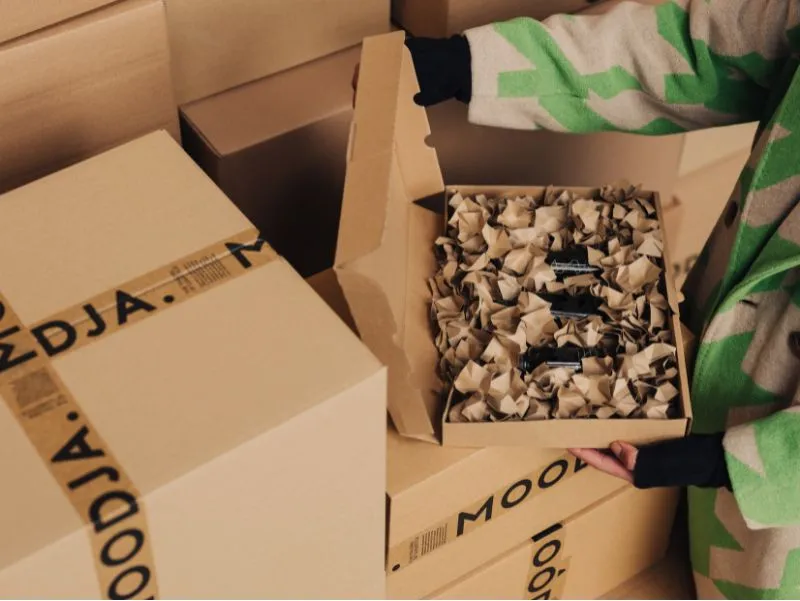
Packaging not only protects the goods, it also transports your brand. Appropriate cardboard sizes, secure filling material and branding elements such as tissue paper or inserts improve unboxing and reduce transport damage. At the same time, costs can be reduced if packaging is standardized and smartly dimensioned.
Shipping and tracking
Shipping is the moment when your performance is visible. Quick handover to the carrier, clean labels and proactive tracking information make the difference between “okay” and “really good.” The more transparent the status, the fewer inquiries and the higher the level of satisfaction.
Returns Management
This includes returns, especially when it comes to fashion and lifestyle. A good returns management Means: rapid acceptance, clear inspection rules, rapid restocking or processing and comprehensible reasons for returns. How to reduce costs, keep inventories up to date and improve your order fulfillment process In the long term.
[[request]]
Order fulfillment process step by step
Step 1: Checkout and Order Sync
As soon as ae If the customer orders, the order is automatically transferred from the shop or marketplace to the system. It is important that payment status, delivery address and shipping option are correctly synchronized. Quality features: no duplicate orders, clean address verification and clear cut-off times for same-day shipping.
Step 2: Commissioning
The items are now assembled in the warehouse, ideally route-optimized and according to clear pick rules. When it comes to variants such as size and color, absolute precision counts. Quality features: clear storage locations, mandatory scanning per item and defined rules for sets, bundles or pre-packs.
Step 3: Quality check
Before packing, it is checked whether the order is complete and correct and whether the goods are in perfect condition. Especially with fashion and accessories It's worth a quick visual check. Quality Features: reconciliation of articles, variants and quantities, defined random samples and documented deviations.
Step 4: Packing
The goods are packaged securely and in line with the brand, including inserts or branding elements, if required. At the same time, the packaging should be selected so that the volume and weight do not increase unnecessarily. Quality features: fixed packing rules for each product category, suitable box sizes and standard transport protection.
Step 5: Carrier Handover and Tracking
After packaging, shipping labels are generated, the shipment is handed over to the carrier and tracking information is played out to customers. This is where it is decided whether shipping really looks “smooth.” Quality features: correct label data, daily carrier pickup according to plan and tracking updates without gaps.
Step 6: Delivery, Support, Returns
Once shipped, the experience counts down to delivery, including clean communication in case of delays. If a return is returned, it must be quickly checked, recorded and, depending on the condition, put back into storage or processed. Quality features: clear escalation channels in support, defined return check rules and quick restocking for resalable goods.
Comparing fulfillment models
In-house fulfillment
Perfect if you can still handle your volume internally and want maximum control. Often useful when there are few SKUs, low variant complexity and clearly predictable peaks. Decision criteria: small to medium order volume, manageable product range, focus on a core country instead of internationalization.
3PL Order Fulfillment
A external fulfillment partner Handles warehouse, pick and pack, shipping and often returns processes. This is worthwhile if you want to scale without immediately setting up your own warehouse, personnel and systems. Decision criteria: growing volume, many SKUs and variants, high service expectations, expansion towards Germany, DACH and EU, and worldwide shipping.
Fulfillment marketplace
Here, a marketplace takes care of the processing, usually with very fast delivery times and a high level of process standardization. This can boost reach and conversion, but brings less brand freedom and greater dependency. Decision criteria: high marketplace share of sales, standardized products, less need for branding, clear priority on speed.
Hybrid Setup
You combine models, such as in-house for special cases and branding orders, 3PL for standard volumes and marketplace fulfillment for individual channels. This is particularly exciting if you serve multiple markets and sales channels or if your product range is very different. Decision criteria: wide range of products, several countries, different service levels per channel, desire for flexibility during peaks and internationalization.

Fashion and lifestyle features in order fulfillment
Variety of variants and clean master data
When it comes to fashion, sizes, colors and styles decide everything. If item numbers, variants and barcodes are not properly maintained, the error packing rate increases immediately. For strong E-commerce fulfillment services You therefore need clear master data rules, unique SKU logic and a system that clearly depicts variants, including set components and seasonal drops.
Textile-friendly handling, boxes, shoes, accessories
Fashion is more sensitive than many other product categories. Fabrics should be crease-resistant, shoe boxes must not be damaged and accessories must be securely fixed. Good fulfillment for e-commerce processes take product categories into account with their own packing rules, suitable filling material and clear standards for visual inspection so that goods do not go out with minor defects.
Kits, bundles, pre packs
Complete looks, gift sets or pre packs are great for shopping cart value in the lifestyle sector, but demanding in logistics. It is important that set logics are correct in the system and that the picking is clearly managed so that no part is missing. Predefined workflows, separate storage locations for bundles and rules for modifications in case variants change are practical.
Personalization for unboxing
You can clearly stand out here. Tissue paper, stickers, thank you cards, inserts or a personalized message ensure brand loyalty without breaking the process if it is cleanly standardized. A boutique service for fashion and lifestyle means: Branding options are flexible, but processes remain stable so that quality and speed maintain even as volumes increase.
[[request]]
Order fulfillment in Germany, the EU and worldwide
Delivery times in DACH and EU, which is realistic
In Germany, customers often expect fast delivery, often in 1 to 2 working days, when cut-off times and carrier collection are clean. Depending on the region and shipping option, it may take a little longer in Austria and Switzerland, especially during peak times. 2 to 5 working days are realistic for EU shipping if processes, tracking and address quality are right. It is crucial that you communicate clear delivery promises and also keep them reliably.
Cross border shipping, customs and taxes in simple terms
Within the EU, you usually send without customs formalities, which include correct billing information and clean tax logic. To Switzerland or the UK, you need customs documents, correct goods values and appropriate commodity tariff numbers, otherwise there is a risk of delays and additional costs. It is also important to have a transparent setup for fees so that customers at the border do not experience any unpleasant surprises.
Worldwide shipping, so you can plan your fulfillment
When you ship worldwide, order fulfillment becomes more complex, especially due to customs, taxes and delivery times. Depending on the region, it is usually 3 to 10 working days, with delays often caused by missing or unclear customs data. Clean product data such as product description, value, country of origin and product tariff number is crucial to ensure that the commercial invoice and customs documents are correct. Also clarify in advance whether you want to deliver DDP, i.e. pay taxes for customers, or whether there are delivery fees. To keep things quiet in support, you need transparent tracking, clear shipping zones and standardized processes for addresses and telephone fields per country. Starting at a certain volume, a setup with international carriers and clear rules for international returns is worthwhile so that your margin does not suffer from returns and post-processing.
Why a location in Berlin is convenient for fulfillment
Berlin is a strong logistics location because you can quickly ship from there to Germany, the DACH region, many EU markets and worldwide. Short distances to carrier networks, predictable pickups and good connections help you keep delivery times stable. This is convenient for growing brands because you manage EU shipping centrally and still remain flexible, even if your volume increases.
Learn more about MOODJA's services
Fulfillment Germany
EU Fulfillment

Quality in fulfillment
Clear packing rules and defined special cases
Quality starts with standards that everyone in the warehouse immediately understands. These include packing rules for each product category, clear requirements for box sizes, filling material and branding elements, as well as defined special cases such as gift packaging, bundles or damaged packaging. If special cases are not solved “by feeling” but are presented as a process, the error rate decreases noticeably.
Samples and quality checks
In addition to mandatory scan for pick and pack, additional quality checks help without slowing down the process. Random samples based on risk are useful, for example for high product values, new products, sale peaks or items with many variants. There is also a brief visual check: condition, completeness, correct variant and clean packaging.
Documentation and recurring error patterns
Mistakes aren't the problem as long as you learn from them. Each discrepancy should be briefly documented: What happened, why, how was it resolved. From this data, you can identify recurring error patterns, such as incorrect sizes, interchanged colors or unclear set logics, and can improve processes and master data in a targeted manner.
Scalability during peaks such as Black Friday and Christmas
Peaks only work with reliable processes. This includes early planned capacities, clear cut-off times, prioritized workflows, simple packaging standards and a setup that absorbs more volume in the short term without sacrificing quality. If processes remain stable even during peak loads, you protect customer satisfaction and margins at the same time.
KPIs that you really need in order fulfillment
Pick Accuracy
Shows how often the order was correctly picked: correct item, correct variant, correct quantity. It is good when the quota is consistently very high and outliers are immediately noticed. You can measure this via scan data in the WMS (Warehouse Management System) plus complaints due to incorrect delivery.
On Time Shipment Rate
Measure how many orders leave the warehouse within your promised time window, such as same-day shipping until cut-off time. A stable rate is good even with peaks. Measuring: Comparison of order receipt, cut-off, shipping label time stamp and actual carrier transfer.
Order Cycle Time
The time from receipt of order to dispatch, i.e. how fast your fulfillment really is. A short, uniform processing time without significant fluctuations is good. Measuring: Time stamp from OMS or shop plus label creation or “shipped” status from the WMS (warehouse management system).
Return rate and return reason codes
Return rate shows the percentage of orders that are coming back, reason codes explain why. Not only is “fewer returns” good, but above all a clear picture of reasons such as fit, quality, incorrect item or damaged goods. Measuring: Record returns rate from the OMS, standardized reasons in the returns process and evaluate them regularly.
Cost per order and packaging cost
Cost per order is your total expenditure per order, packaging cost is the share of cardboard, filling material and branding. Good is a calculable range that decreases rather than rises with volume. Measuring: Combine fulfillment fees, material consumption and shipping costs per order, ideally as monthly reporting by channel and country.
First Contact Resolution in Support
Shows how often a concern is resolved upon initial contact, without inquiries or escalation. A high rate is good because it directly saves time and money and increases satisfaction. Measuring: Support tool data, categories such as “Where is my package,” “Change of address,” “Return status” and links to tracking and fulfillment events.
Costs and Pricing Models Explained in an Understandable Way
Setup and onboarding
It starts with setup and connection: connect systems, set up master data cleanly, define packing rules and deliver the first goods. Costs arise primarily from project work, test runs and the setting up of standard processes. It is important not to save money here, because clean onboarding reduces errors and ongoing additional costs later on.
Storage costs
Storage costs usually depend on occupied space, number of items or pallets and shelves. There are also goods receipt and storage services, depending on how detailed the inspection and recording is carried out. Typical fashion cost driver: many variants and sizes, because the product range requires more storage space and stocks are becoming more fragmented.
Pick and pack fees
Pick and pack is often calculated per order and per position, sometimes with tiered prices based on volume. Additional work steps such as set assembly, labeling or poison options can count as additional services. Typical fashion cost drivers: bundles, sets and outfits, because several pieces must be brought together in one order and checked correctly.
Packaging materials and personalization
This involves boxes, filling material, adhesive tape, mailing bags and branding elements such as tissue paper, stickers, thank you cards or inserts. Cost drivers include in particular individual packaging requirements, many different box sizes and frequently changing campaign inserts. Good standardization lowers material costs and saves packing time.
Shipping costs
Shipping costs depend on weight, volume, destination and service level, i.e. standard, express or same day. EU shipping and worldwide destinations can vary significantly, depending on the carrier and customs setup. Cost drivers include volume weight due to too large boxes, unclear shipping rules at the checkout and many partial deliveries.
Return costs and processing
Returns involve costs for acceptance, verification, recording and restocking or processing. The more detailed the inspection, the higher the costs, but also the better the quality in resale. Typical fashion cost drivers: high return rate and complex returns verification, for example condition, labels, smell, complete set of components and repacking for resale.
Tech Stack and Integrations
Shop Systems and Marketplaces
To ensure that orders reach fulfillment without friction, you need a stable connection between your sales channels. Shop systems such as Shopify, Shopware or WooCommerce As well as marketplaces that can also bring their own shipping logics. It is important that orders, payment status, shipping methods and cancellations are transferred cleanly so that there are no duplications or incorrect prioritization.
OMS and WMS basics
An OMS (Order Management System) bundles orders from all channels, controls rules such as split shipments or priorities, and ensures clean status reports back to the shop. The WMS (Warehouse Management System) is the operational heart of the warehouse: stocks, storage locations, pick routes, packing rules, scans and transfer to dispatch. The more clearly OMS and WMS work together, the more stable your order fulfillment will be in terms of growth and peaks.
Tracking and notifications
Tracking is not just a “nice to have,” but a support killer. Clean tracking events, automatic shipping confirmations and proactive notifications reduce “Where is my package” inquiries and increase satisfaction. It is important that status messages are consistent and work reliably even with EU shipping and international shipments.
Data quality, interfaces, automations
The most common problems don't come from the warehouse, but from data: missing barcodes, unclear variants, incorrect weights, duplicate SKUs, or inconsistent product names. Good interfaces and clear data standards prevent this. Automations, such as address checks, regulations for packaging and shipping zones, or automatic return labels, i.e. help to scale processes without sacrificing quality.
[[request]]
Sustainability in order fulfillment
Optimizing packaging instead of sending air
Define standard boxes, use the smallest reasonable packaging and optimize filling material. Measurable through lower volumetric weight, less material per order and lower transport damage.
Consolidating shipments
Reduce partial deliveries, bundle items and consciously manage subsequent deliveries. Measurable by fewer packages per order, fewer shipping costs and less CO₂ per order.
Returns processing and rapid recommerce cycle
Check returns according to clear rules, prepare resalable goods and return them to inventory quickly. Measurable through restocking time, resale rate and lower copies.
Partner Network with Clear Standards
Work with carriers and delivery partners who offer stable delivery times, transparent tracking events and efficient collection processes. Measurable via on time shipment rate, delivery rate in the first attempt and fewer support requests.
Data-based improvement instead of good feeling
Consistently record packaging consumption, return reasons and error patterns, then you can optimize in a targeted manner. Measurable through a falling error rate, lower material costs and more stable KPIs during peaks.
Provider selection
Industry fit
Check whether the supplier has experience with your product range, for example fashion, lifestyle or accessories such as MOODJA. Processes for variants, sets and high return rates are important, otherwise special cases quickly become expensive and slow.
Quality Standards and Service Level Agreements (SLAs)
Get clear standards: mandatory scanning, packing rules, random checks, cut-off times and defined escalations. SLAs should include things like same-day shipping, incorrect packing rate, return time, and reporting.
Transparency in costs and KPIs
You need a pricing model that you can understand and plan, including additional services such as bundling or personalization. At the same time, KPIs such as Pick Accuracy, On Time Shipment Rate and Return Reasons should be regularly reportable without you having to ask questions each time.
Scaling and peak planning
Ask specifically how Black Friday, Christmas or Drops are covered: capacities, additional shifts, cut-off adjustments and clear prioritization. A good partner scales volumes without sacrificing quality and delivery times.
Communication and permanent contacts
Quick response times, permanent contacts and clear responsibilities are worth their weight in gold in everyday life. Pay attention to how clean communication is going during onboarding, which is usually a good indicator of ongoing operations.
Proximity to main markets, EU connection, Berlin as a hub
If your focus is Germany, DACH and EU shipping, location counts. Proximity to main markets, good carrier connections and short distances make delivery times more predictable and reduce costs. A hub like Berlin can be practical because you can ship centrally from a strong logistics network to Germany and many EU countries.
Order fulfillment with MOODJA
MOODJA takes care of your order fulfillment end to end: from incoming goods to inventory management to pick and pack, packaging, shipping and returns management. The focus is on fashion, lifestyle and accessories, with clear packing rules, clean quality checks and flexible branding options for your unboxing. As a boutique partner, we do not work according to Scheme F, but set up processes in such a way that they fit your product range, your channels and your growth. Our EU fulfillment location in Berlin is designed to keep delivery times stable to Germany, the DACH region, the EU and worldwide. And if you want to measurably implement sustainability, we optimize packaging, processes and returns processing in such a way that quality and efficiency go hand in hand.
[[request]]
Order Fulfillment FAQ
What is the difference between fulfillment and order fulfillment
Order fulfillment means the specific ordering process from order receipt to delivery. Fulfillment is wider and also often includes incoming goods, warehouse strategy, preparation, return processes and, depending on the setup, customer service.
From what volume is a worthwhile 3PL partners
As soon as you notice that internal processes are eating up time, errors are increasing or that peaks are reaching their limits, a 3PL becomes exciting. Typical triggers include growing order volumes, many SKUs and variants, increasing EU shipping and the desire for predictable delivery times without setting up your own warehouse team.
Which KPIs should I report on a monthly basis
Pick Accuracy, On Time Shipment Rate, Order Cycle Time, Return Rate with Return Reason Codes and Cost per Order including Packaging Cost are a solid set. When you consider support, First Contact Resolution is a strong indicator of process quality.
How do I reduce bad packs and returns
Reduce incorrect packaging with mandatory scanning, clear storage locations, packing rules and random checks according to risk. You can also reduce returns through clean master data, clear product information in the shop and by evaluating return reasons so that you can quickly correct recurring patterns.
How fast can I deliver across the EU
It is usually 2 to 5 working days within the EU, depending on the destination country, carrier and service level. Cut-off times, daily pickups, clean address data and seamless tracking are important so that the delivery promise is kept.
Can I use my own packaging
Yes, it is usually possible. It is crucial that material, dimensions and packing rules fit into the process so that protection, efficiency and costs remain in balance.
Order Fulfillment Conclusion
Order fulfillment is the lever that makes growth predictable because orders are processed quickly, correctly and efficiently. It increases customer satisfaction through reliable delivery times, clean tracking and unboxing that fits the brand. At the same time, it protects your margin because errors, rework and unnecessary shipping costs fall and you can control processes using KPIs. For fashion and lifestyle in particular, clear standards, strong data quality and a returns process that makes goods available again quickly. If you want to scale widely in Germany, in the DACH region and in the EU, a setup that remains stable even during peaks is worthwhile. Let's talk briefly about your product range, channels and goals, then we'll show you how to scale your order fulfillment cleanly with MOODJA.
[[request]]


