


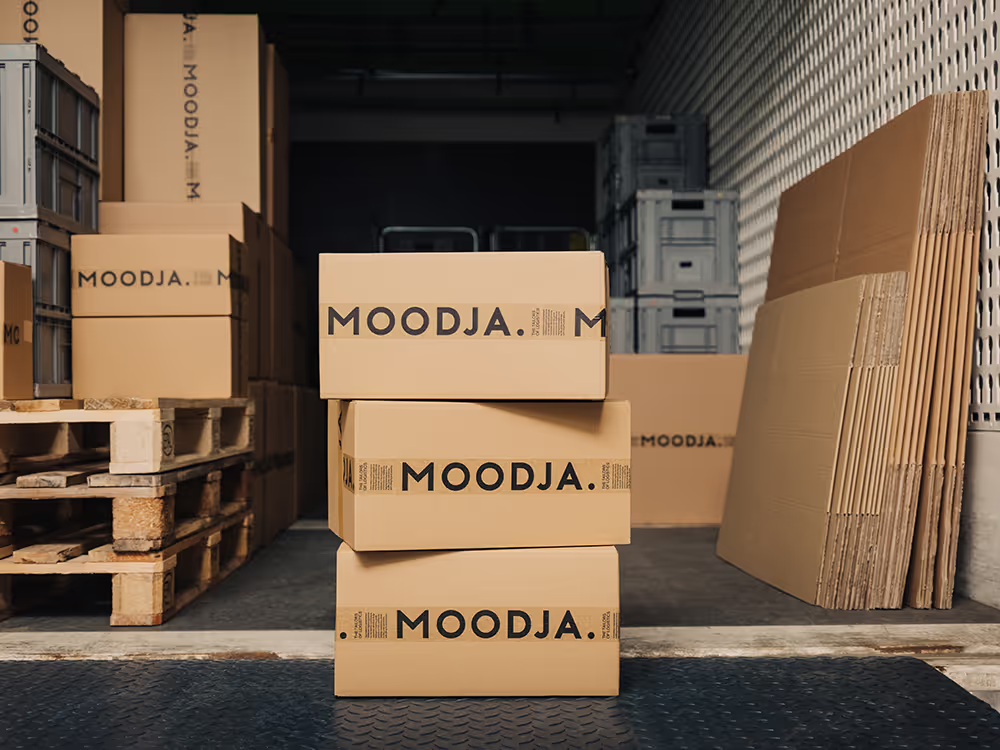
1. What is fulfillment?
Fulfillment In e-commerce, refers to the entire process that takes place after the purchase in an online shop - from receipt of the order to storage, picking, packaging, shipping and possible returns. In short, it's about making your products reach your customers reliably, quickly and in line with the brand.
For online stores Fulfillment is therefore a central element in day-to-day business. Because no matter how well your marketing performs or how beautiful your shop looks - when logistics get stuck, it has a direct effect on customer satisfaction. Fast delivery times, clean packaging and smooth returns have long been standard. Anyone who is not convincing here loses buyers - or does not win them in the first place.
That is why fulfillment is more than “just shipping”. It is a fundamental part of your customer experience. Fulfillment is becoming a strategic success factor, especially for growth-oriented brands - and helps determine how scalable and efficient your business is.
2. How does fulfillment work exactly?
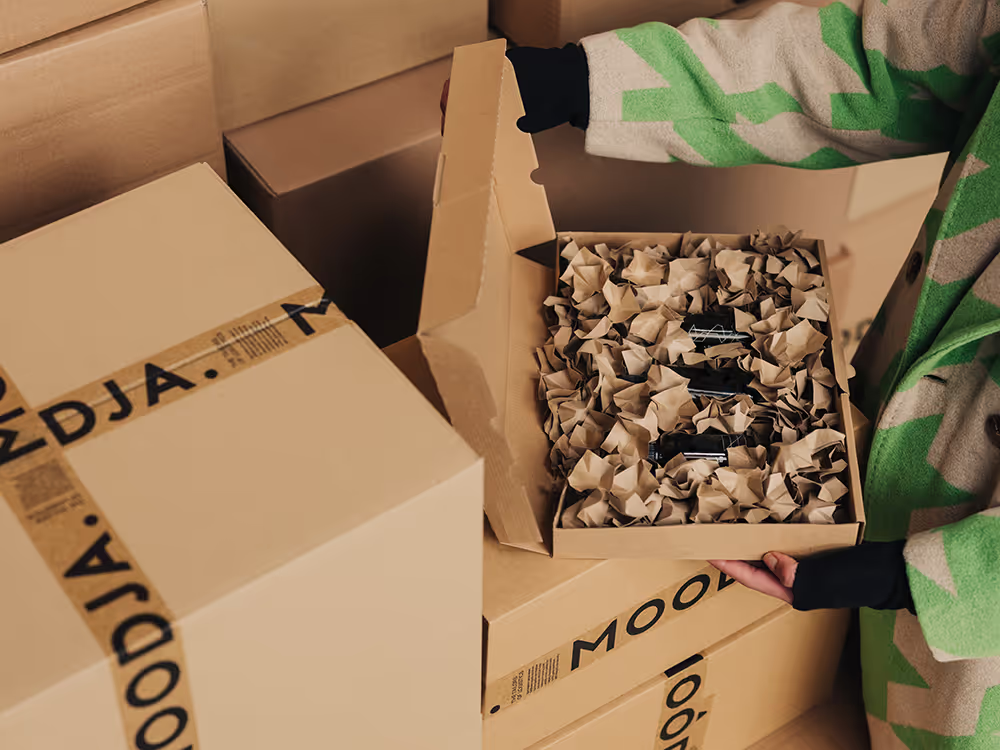
Fulfillment starts as soon as your online shop receives an order. A process is automatically triggered in the background: The appropriate goods are searched for in the warehouse (order picking), packaged, provided with a shipping label and handed over to the desired service provider. At the same time, your customer will receive a shipping notification with a tracking link. Sounds simple - but in reality it's a complex interplay of technology, timing and teamwork.
Ideally, your shop system (such as Shopify, WooCommerce, or Shopware) is connected directly to the fulfillment service provider. As a result, the flow of information is automated - from receipt of order to shipment number. modernism Fulfillment providers such as MOODJA We also work with individual warehouse management systems that are specifically optimized for fashion and lifestyle products.
Fulfillment is successful when everything works together smoothly. Because this is the only way to create a system that can keep up with your growth - and won't become a bottleneck at some point.
[[request]]
3. Which services are included in fulfillment?
Fulfillment involves much more than just sending packages. It is a comprehensive service that combines multiple logistics processes - and is often individually tailored to your brand. An overview of the most important services:
Receipt & storage
Before it starts, your goods are recorded and stored in the fulfillment center. Whether folded, on hangers or in original packaging - store at MOODJA, for example Fashion and lifestyle products brand-appropriate and safe.
Commissioning & packaging
As soon as an order is received, the appropriate product is removed from the warehouse (commissioned) and prepared for shipping. This includes packaging - preferably with your branding, tissue paper, stickers or inserts for a high-quality unboxing experience.
Shipping & tracking
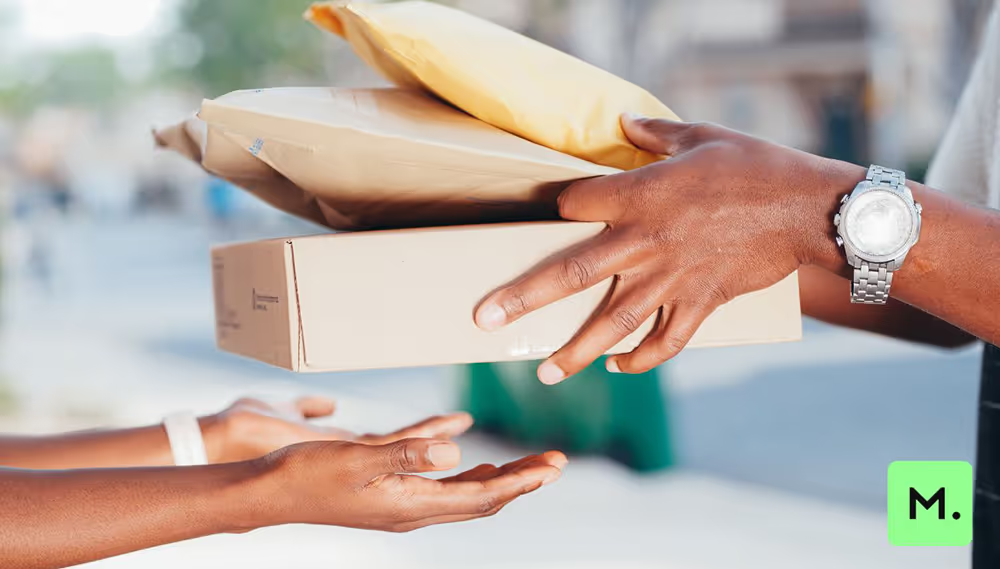
Depending on your wishes, fulfillment service providers ship with various carriers such as DHL, DPD or UPS. Tracking data is automatically transmitted to your customers. For you, this means: full transparency - for your customers: full anticipation.
returns management
Returns are also part of fulfillment. Professional providers check returned items, repack them and - depending on their condition - bring them back to the warehouse, dispose of them professionally, donate them or sell them at the outlet. This saves time and preserves the value of the goods.
Good fulfillment partners offer all of this in a flexible and scalable way - just the way you need it.
4. What does fulfillment cost?
The costs for fulfillment consist of several components - and depend heavily on how many orders you send, which products you offer and which services you use.
Typical price components are:
- Receipt of goods: one-time costs per delivered product unit or pallet.
- Storage costs: monthly price per storage space (e.g. per shelf, box or pallet).
- Pick & Pack: Picking and packaging per order.
- shipping costs: vary depending on the service provider, package size and destination region.
- additional services: e.g. branding, relabeling, inserts or returns processing.
Many providers work with tiered prices - the more you send, the cheaper it gets per package. However, fulfillment is not a discount service. Quality, reliability, and scalability come at a price and pay off.
tip: Get an individual offer. This is the only way you can get realistic figures - and be able to better calculate whether outsourcing pays off for you.
5. What does a fulfillment service with MOODJA cost?
With MOODJA, you won't get 08/15 fulfillment. Instead, we offer you a boutique service that is tailored to your brand, your products, and your customers. Our prices are based on your actual needs - transparent, scalable and without hidden costs.
What does that mean in practice:
- Fair warehouse prices, adapted to the nature of your products (e.g. hanging or lying down)
- Commissioning from the first order, with smart picking processes
- Packaging according to your wishes, branded from neutral to high-end
- Returns processing that suits your requirements, including visual inspection, steam cleaning or repackaging
- IT integration included, so that everything runs automatically - from the shop to the shipment number
We bill transparently per unit. You only pay for what you use. And the best part: Our team will give you honest and personal advice - without any hard selling.
Do you want specific figures? Request a quote now - we will provide you with a transparent calculation, tailored to your business.
[[request]]
6. What does fulfillment actually mean - in the context of growth & scaling?
Fulfillment is much more than an operational process. It is a strategic tool for growing brands. It creates freedom, reduces complexity - and helps you scale your business efficiently and in line with the brand.
Imagine: You suddenly get twice as many orders - Black Friday, launch, influencer campaign. If you do your fulfillment yourself, you quickly reach limits. With a professional partner like MOODJA, on the other hand, you can flexibly scale up and down - without fixed costs, without staff stress, without loss of quality.
Good fulfillment means:
- Less operational load for your team
- More time for your business - Product development, marketing, branding
- Higher customer satisfaction thanks to fast delivery times and perfect packaging
- Predictable processesthat keep pace with your growth
In short: Fulfillment is the backbone of your e-commerce and helps determine how well you can scale.
7. Who really needs fulfillment?
Fulfillment is not only worthwhile for the very big ones. On the contrary, small and medium-sized brands in particular benefit enormously from outsourcing their logistics. Because if you want to grow, you have to be able to scale while remaining flexible.
Typical candidates for professional fulfillment include:
- startupswho grow quickly and prefer to invest their resources in product and marketing
- DTC-Brandswho have high standards of branding and customer experience
- Companies with seasonal peaks, e.g. at Christmas, Black Friday or launches
- International retailerswho want to ship from the EU center
- Shop operatorswho simply no longer have time for packing tables and returns
So the question is not “Am I big enough for fulfillment yet? ”, but:
“What would I be able to achieve if I were to hand over logistics? ”
If you feel that your warehouse is draining you of energy - then it might be time for a fulfillment partner.
8. What is a fulfillment partner - and what should you pay attention to when choosing?
A fulfillment partner is more than just an external service provider. In the best case, he is a real Extend your brand - and understands what matters to you: speed, quality, branding and a collaborative partnership.
But what should you pay attention to when choosing?
Brand understanding
Does the fulfillment provider match your style? Does he understand how important packaging, look & feel are for your customers?
Technical integration
Can he use your shop system (e.g. Shopify, Shopware, WooCommerce) and, if necessary, connect your ERP cleanly? Fulfillment never really runs smoothly without tech interfaces.
Scalability & flexibility
Does your partner grow with you? Can it cushion peaks such as Christmas, sales or product launches - without sacrificing quality?
Transparency & communication
Is the provider available, honest and willing to work with you to find solutions? Or will you become a ticket number?
A fulfillment partner like MOODJA works with you -. not just for yourself. We see ourselves as a boutique provider that makes your e-commerce scalable, stylish and stress-free.
[[request]]
9. Is fulfillment worthwhile for your company?
The short answer: Yes - if you want to grow without burning yourself out.
Fulfillment relieves you of logistical to-dos, creates space for your core business and ensures that your customers reliably get exactly what they expect - or even a little more. Instead of managing inventory, packaging, and shipping, you can focus on what makes your brand great: your product, your marketing, your vision.
Your benefits at a glance:
- saving time through outsourced processes
- Professional branding right down to the package
- Flexibility & scalability, even during growth or seasonal peaks
- Reliability & transparency, without operational stress
Whether it's a start-up or an established DTC brand - the right fulfillment partner becomes a real growth driver.


