


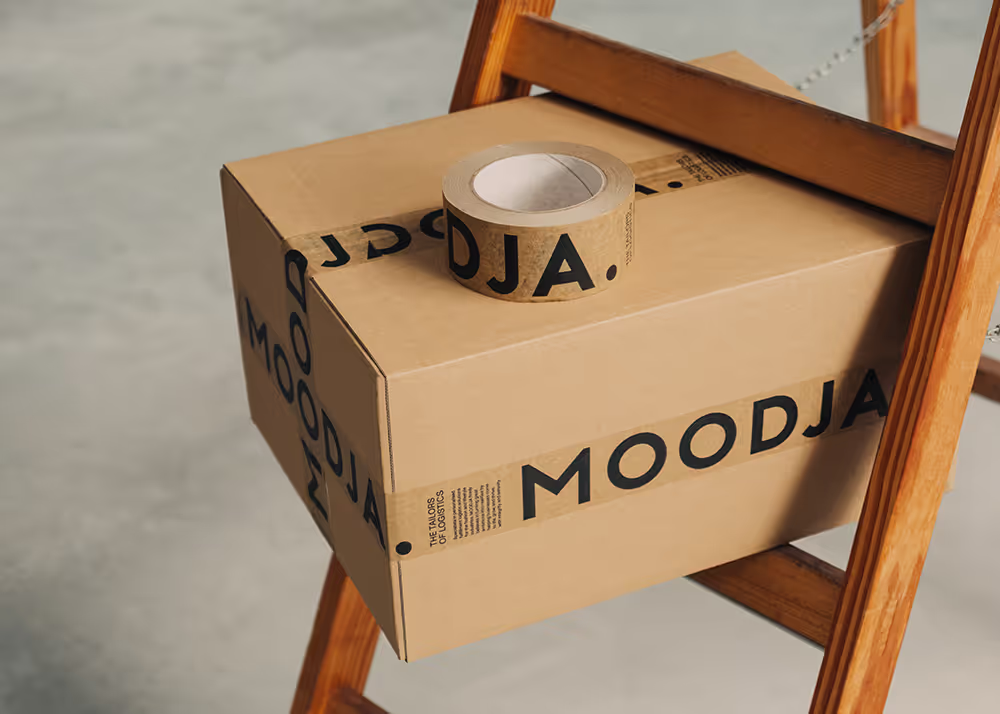
Introduction: Fulfillment that fits your brand
In modern online retail, it is no longer just the product that determines success or failure, but the experience behind it. Ecommerce Fulfillment Is the invisible engine that makes brands grow, inspires customers and makes logistics a competitive advantage. But while many providers scream out for efficiency, hardly anyone talks about the detail, aesthetics and responsibility behind every package.
With MOODJA We do not see fulfillment as a pure service, but as a boutique service. A mix of smart technology, precise processes and a personal signature that fashion and lifestyle brands deserve. In this guide, you'll learn what e-commerce fulfillment really means and how to optimize your logistics so that it fits your brand.
****
What is e-commerce fulfillment? (Definition & meaning)
Ecommerce fulfillment simply explained
Ecommerce fulfillment describes all logistics processes that are necessary to process online orders — from storage and packaging to shipping and returns processing. It is the backbone of every online shop and influences both customer satisfaction and brand perception.
E-commerce fulfillment definition
e-commerce fulfillment = Complete logistical processing in online retail, including:
- Receipt of goods
- warehousing
- picking
- wrapping
- shipping
- Returns Management
Fulfillment meaning for modern brands
Fulfillment is no longer “just logistics.”
It is:
- A promise of quality
- A service experience
- A Growth Lever
- And a decisive element for your brand story
Because a package is often the first physical contact between your brand and your customers.
[[request]]
Why e-commerce and fulfillment are inseparable
Without reliable logistics, there is no stable growth.
Without optimization, there is no margin.
Without quality, there is no trust.
Fulfillment as the core of online retail
A Shopify store is quick to set up. An Instagram post created in seconds. bout Logistics needs substance: structure, precision, process intelligence.
How good fulfillment influences conversion & returns
- Fast delivery times → higher conversion rate
- Clean packaging → stronger branding
- Clear shipping communication → less support
- Smart returns processes → better reviews
Ecommerce and fulfillment: a strategic duo
Technology + logistics = sustainable growth.
Only with both components can you scale efficiently and without loss of quality.
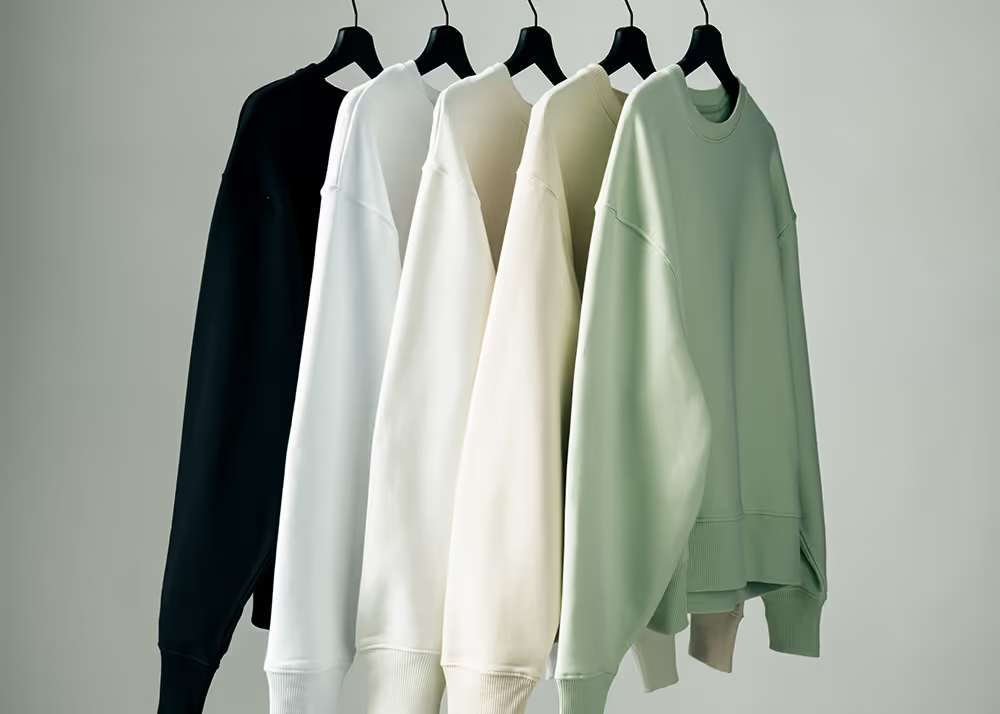
The most important processes in e-commerce fulfillment
Your fulfillment is only as good as the individual steps behind it.
Incoming goods & warehouse management
The process starts with structured incoming goods:
- scanning
- Quality check
- Relabeling
- emplacement
A precise start prevents errors in the entire fulfillment process.
Commissioning & packaging
This is where it is decided how your brand is perceived.
- Pick & Pack optimized
- Sustainable packaging
- Personalized branding
- Love-to-detail when unboxing
For fashion & lifestyle brands, this is a moment that counts.
Shipping & tracking
Modern customers expect transparency.
That is why it needs:
- reliable carriers
- Real time tracking
- international options
- Clear Communication
Returns & processing
Returns are part of this and are an underrated image factor.
- Inspection
- Repackaging
- Steaming/Refreshing
- Re-stocking
Smart returns management saves money and strengthens the brand.
[[request]]
Ecommerce fulfillment services - which services are relevant?
Every brand has different requirements. That's why fulfillment is modular.
Standard Services
- warehousing
- picking
- wrapping
- shipping
- Returns processing
Expanded Services
- Individual packaging concepts
- Value-Added Services (VAS)
- Quality checks
- Ironing & Steaming Services
- Sustainability packages
Personalized Fulfillment Services
Fashion & lifestyle need customization:
- Hangware
- Sets & bundles
- Drops & Limited Editions
- Influencer kits
- Same-day shipping options
Boutique services make the difference between standard and premium.

Benefits of Professional Fulfillment for E-Commerce Brands
Why delegate because growth requires structure.
1. Scalability
As demand increases, your fulfillment simply grows with you - without stress, without overwhelming demands.
2. Time & cost savings
Internal logistics tie up resources and space. Outsourcing creates space for focus: product, marketing, creativity.
3. Better customer experience
Faster delivery = happier customers.
Error-free packages = stronger customer loyalty.
4. Efficiency through automation
Modern systems create transparency:
- Inventory data in real time
- Automated Pick & Pack
- Interfaces to shop systems
This creates smart, error-free processes.
[[request]]
Which fulfillment solution is right for your online shop?
In-house vs. outsourcing
In-house fulfillment
- full control
- high expenditure
- limited scaling
- high fixed costs
outsourcing
- Professional processes
- rapid scaling
- Less complexity
- Expertise on demand
Who is outsourcing worthwhile for?
- Fast-growing online shops
- D2C Brands (direct-to-consumer brands)
- Fashion & lifestyle brands
- Companies that ship internationally
Criteria for the right partner
- Industry expertise (fashion/lifestyle), such as MOODJA
- flexibility
- IT integration
- transparent prices
- sustainability
- personal care

Ecommerce fulfillment vs. operations - what's the difference?
Fulfillment
= Logistical execution
(Packaging, Shipping, Returns)
E-Commerce Operations
= Overall process of online trading
including marketing, customer support, payment, IT.
Both areas must go hand in hand in order to grow efficiently.
Ecommerce fulfillment challenges, and how to overcome them
1. Peaks & Seasonal Fluctuations
Black Friday, Christmas, drops — it's hard to do without scalable structures.
2. Returns
Fashion brands have return rates of up to 50%.
Efficient processes are a must.
3. Internationalization
Customs, transit times, carrier selection - complexity is increasing rapidly.
4. Technical integration
APIs & interfaces must speak to each other cleanly.

Technologies & tools in fulfillment
Warehouse Management Systems (WMS)
Smart systems ensure:
- Real-Time Inventory
- Automated Processes
- Reduction of errors
automation
From barcode scanning to pick-by-light - technology makes processes faster and safer.
Shop integrations
Modern fulfillment providers, such as MOODJA, support, among others:
- Shopify
- WooCommerce
- Shopware
- Magento
- Plenty
- Tradebyte
The cleaner the integration, the smoother the fulfillment.
What does e-commerce fulfillment cost?
The costs typically consist of:
- storage fees
- Pick & Pack
- Packaging material
- Shipping costs
- Returns processing
- Additional Services (VAS)
Costs vary depending on:
- Item size
- Order volume
- SKU number
- Storage period
- Desired service level
Important: It is not the cheapest provider that is the best — but the one that supports your growth.
We would be happy to create an individual range.
[[request]]
Conclusion: The right e-commerce fulfillment makes brands stronger
Fulfillment isn't a back office issue — it's a brand driver.
When logistics is implemented aesthetically, personally and efficiently, the result is an experience that delights customers.
With a boutique approach like MOODJA, Fulfillment becomes a partner of your ambition: smart, stylish and future-oriented.
***
FAQ about e-commerce fulfillment
What does fulfillment mean?
The complete logistical process in online retail, from storage to returns processing.
What is part of e-commerce fulfillment?
Receipt of goods, storage, picking, packaging, shipping, returns management.
When is a worthwhile Fulfillment provider?
As soon as your growth overwhelms internal structures or blocks scaling.
What services do fulfillment providers offer?
Storage, Pick & Pack, Shipping, Returns - plus additional services such as Relabeling, Preparation or Personalized Packaging.
How does returns management work in e-commerce?
Items are checked, processed and, depending on their condition, stored again or sorted out.


